




Key Takeaways:
- Left-turn accidents in San Antonio can lead to serious injuries and disputed liability, especially when drivers disagree about right-of-way, speed, traffic signals, or lane position.
- Drivers turning left must yield to oncoming traffic that’s already in the intersection or close enough to create an immediate hazard.
- Common causes include failure to yield, speeding, distracted driving, traffic signal violations, blocked visibility, unsafe lane changes, impairment, fatigue, and aggressive driving.
- Compensation may include medical expenses, future treatment, lost income, reduced earning capacity, physical pain, mental anguish, physical impairment, and property damage. Wrongful death compensation may also be available when a collision is fatal.
- Texas follows modified comparative negligence rules, so both drivers can share fault. Your compensation is reduced by your percentage of responsibility, and you can’t recover damages if you’re found more than 50% responsible.
- After a left-turn crash, call 911, seek medical care, document the scene, gather witness information, preserve video, notify your insurer, and keep records of your losses. A San Antonio car accident lawyer can use that evidence to evaluate liability and pursue your claim.
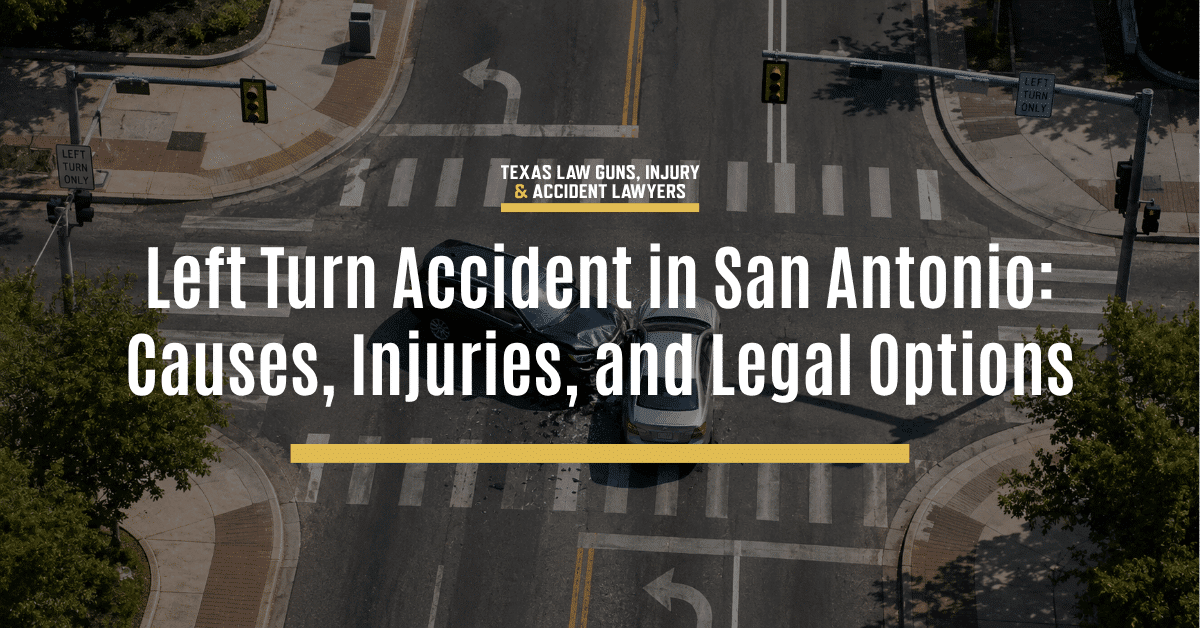
A left-turn accident happens when a vehicle turning left hits, or is hit by, another vehicle, cyclist, or pedestrian while crossing oncoming traffic lanes. Under Texas Transportation Code § 545.152, a driver turning left must yield to a vehicle approaching from the opposite direction when that vehicle is either:
- Already in the intersection or;
- Close enough to create an immediate hazard
At Texas Law Guns, Injury & Accident Lawyers, we investigate these collisions by examining the right-of-way issue, the conduct of each driver, and any available video and witness evidence. If another driver caused your injuries, let us fight for the settlement or verdict you need to cover your damages.
What is a Left-Turn Accident?
A left-turn accident happens when a driver turns across or into another lane of traffic and collides with another vehicle, cyclist, motorcyclist, or pedestrian. These crashes frequently occur at intersections, but they can also happen when a driver turns into or out of a driveway, parking lot, side street, or business entrance.
One common scenario involves a driver turning left across oncoming traffic while another vehicle continues straight through the intersection. Accidents can also happen when a driver misjudges the speed of an approaching vehicle, turns from the wrong lane, enters the intersection against a traffic signal, or starts the turn when visibility is blocked.
Many left-turn crashes involve side impacts. If an approaching vehicle strikes the door area of the turning car, the occupants have less distance between their bodies and the point of impact than they would in a front- or rear-end collision. That can increase the risk of serious injury, especially when the approaching vehicle is traveling at a higher speed.
Who Has the Right of Way When Turning Left in Texas?
We mentioned at the beginning that Texas law requires a driver turning left at an intersection, alley, private road, or driveway to yield to a vehicle approaching from the opposite direction if that vehicle is already in the intersection or close enough to present an immediate hazard. In practical terms, a driver can’t begin a left turn simply because the traffic signal is green. The driver must still determine that the turn can be completed without interfering with approaching traffic.
Traffic signals also affect the right-of-way determination:
- A protected green arrow permits a left turn while opposing traffic is stopped.
- A solid green light allows a driver to turn left only after yielding to approaching traffic and pedestrians.
- A flashing yellow arrow permits a left turn, but the driver must yield before entering the path of oncoming vehicles.
The turning driver isn’t always responsible for every left-turn collision. An approaching driver may contribute to the crash by speeding, entering the intersection against a red light, changing lanes unsafely, or driving while distracted. Investigators usually review traffic signal data, witness statements, video footage, vehicle damage, and roadway evidence to determine how the collision occurred and how responsibility should be divided.
Common Causes of Left-Turn Accidents in San Antonio
Left-turn crashes usually happen because one or both drivers make an error in judgment, violate a traffic rule, or fail to respond to changing traffic conditions. Because the turning vehicle must cross another lane of travel, even a short mistake can place it directly in the path of an approaching car. These errors include:
- Failure to Yield: A driver may start a left turn before oncoming traffic has cleared the intersection. This can happen when the driver misjudges another vehicle’s speed, distance, or time of arrival. If an approaching vehicle is close enough to create an immediate hazard, the turning driver must yield.
- Speeding: Speed can affect both fault and the severity of the collision. An approaching driver who is traveling too fast may reach the intersection sooner than the turning driver expects and may have less time to brake or avoid impact. Excessive speed can also increase the force of a side-impact crash.
- Distracted Driving: Drivers who look at their phone, adjust navigation, talk to passengers, or take their attention away from traffic may fail to see an approaching vehicle before starting a turn. Distraction can also affect the oncoming driver’s ability to react when another vehicle enters the lane.
- Traffic Signal Violations: Disputes can arise when one driver says the light was green and the other says it was red. A driver who enters an intersection after the signal changes may contribute to a collision, while a turning driver who proceeds without yielding can also be responsible. Traffic camera footage, nearby surveillance video, and witness statements can help establish what the signal displayed before impact.
- Obstructed Visibility: Large vehicles, roadside construction, signs, vegetation, darkness, and weather can limit a driver’s view of approaching traffic. A driver still has to wait until the path is clear before completing a left turn.
- Unsafe Lane Changes or Turning From the Wrong Lane: A collision can occur when a driver changes lanes while approaching an intersection or attempts a left turn from a lane that doesn’t permit it. These crashes can become disputed because each driver may claim the other vehicle moved unexpectedly before impact.
- Impaired or Fatigued Driving: Alcohol, drugs, some medications, and fatigue can affect reaction time, judgment, and perception. A driver may misread the distance of approaching traffic, respond too slowly to a changing signal, or fail to stop before entering another vehicle’s path.
- Aggressive Driving: Some drivers try to complete a left turn before approaching traffic reaches the intersection rather than waiting for a safer opening. That decision can leave little time for either driver to avoid a crash once the vehicles are on a collision course.
What Compensation Can You Seek After a Left-Turn Accident?
- Medical Expenses: You may seek compensation for the medical care required because of the crash. This can include ambulance transportation, emergency room treatment, hospitalization, surgery, and follow-up appointments.
- Future Medical Care: Some injuries require treatment long after the initial hospital visit, and those anticipated expenses may be included in your claim. Future care can be especially important when a collision causes spinal injuries, traumatic brain injuries, fractures, or permanent mobility limitations.
- Lost Income: Injuries may prevent you from returning to work while you recover or attend medical appointments. You may be able to recover the wages, salary, commissions, bonuses, or other employment income you lost during that time.
- Reduced Earning Capacity: You may be unable to perform the same duties, work the same number of hours, pursue promotions, or continue in the same occupation. A claim for reduced earning capacity addresses the difference between what you could have earned without the injury and what you’re capable of earning after it.
- Physical Pain: Texas personal injury claims can include compensation for the physical pain caused by your injuries. The amount can depend on the type of injury, how long the pain lasts, the treatment required, and how the symptoms affect your daily life.
- Mental Anguish: Mental anguish damages may address conditions such as anxiety, depression, sleep problems, fear associated with driving, or emotional distress caused by lasting injuries.
- Physical Impairment: You may have difficulty walking, driving, exercising, caring for your family, performing household tasks, or participating in hobbies and recreational activities. Physical impairment damages address these limitations when they result from the crash.
- Property Damage: You may seek payment for damage to your vehicle and other personal property involved in the collision. Depending on the extent of the damage, this can include repair costs or the value of a vehicle that is declared a total loss.
If a left-turn collision results in death, eligible family members may also have a wrongful death claim under Texas law.
FAQs About Left-Turn Accidents in San Antonio
Can Both Drivers Be at Fault for a Left-Turn Accident?
Yes. Texas is a modified comparative negligence state, which means fault can be divided among two or more people whose actions contributed to a crash. Under Texas Civil Practice and Remedies Code Chapter 33, your compensation can be reduced by your percentage of responsibility, and you can’t recover damages if you’re found more than 50% responsible. For example, a driver may turn left without yielding while an approaching driver is traveling well above the speed limit. If a jury finds the turning driver 80% responsible and the approaching driver 20% responsible, a $100,000 damages award for the approaching driver would be reduced by 20% to $80,000. Establishing each driver’s conduct before impact can directly affect the amount of compensation you’re able to recover.
What Should I Do After a Left-Turn Accident?
Call 911: Report the collision and request emergency medical assistance if anyone is injured. A responding officer can document the scene, identify the drivers involved, speak with witnesses, and prepare a crash report that may become useful during an insurance claim or lawsuit.
Get Medical Care: Seek medical evaluation after the crash, even if you don’t immediately recognize the extent of your injuries. Symptoms from concussions, soft-tissue injuries, internal injuries, and other trauma may appear hours or days later. Medical records can also connect your injuries and treatment to the collision.
Photograph and Record the Scene: Take photos or video of the vehicles, damage, traffic signals, lane markings, signs, skid marks, debris, and surrounding roadway. If visibility contributed to the crash, document anything that blocked the view of approaching traffic.
Get Witness Contact Information: Ask witnesses for their names, phone numbers, and email addresses. A person who saw the collision may be able to describe which vehicle entered the intersection first, what the traffic signal displayed, or how the drivers were behaving before impact.
Preserve Available Video: Dashcam footage can provide direct evidence of the crash. Nearby stores, restaurants, apartment buildings, homes, or other properties may also have surveillance systems that recorded the intersection.
Notify Your Insurance Company: Report the accident according to the terms of your policy and provide accurate information about what happened. Avoid guessing about speed, distance, or fault. The evidence should determine responsibility.
Keep Records of Your Losses: Save medical bills, receipts, repair estimates, towing invoices, rental vehicle expenses, employment records, and communications with insurers. These records can help document the economic losses caused by the crash.
Speak With a San Antonio Car Accident Lawyer: An attorney can investigate the collision, preserve evidence, examine right-of-way issues, assess allegations that you contributed to the crash, communicate with insurance companies, and pursue compensation through a claim or lawsuit.
Get a Free Consultation From a San Antonio Car Accident Lawyer
A left-turn accident can raise disputes about right-of-way and the actions of each driver before impact. At Texas Law Guns, Injury & Accident Lawyers, we can investigate the crash, deal with insurance companies, document your losses, and pursue compensation while you recover. For more information or to schedule your initial consultation, call our personal injury law firm at (844) LAW-GUNS today.

Alexander Begum ha litigado más de 50 juicios y ha llevado a juicio o resuelto casos por más de $500 millones. Alex es accionista fundador de Texas Law Guns, Injury and Accident Lawyers.